OSO in 2026
From a data pipeline to an AI-powered data platform

2025 was a transformational year for OSO.
One year ago, OSO was a monolithic data pipeline focused on Ethereum. Today, we’ve built one of the most sophisticated AI-powered data platforms in the industry, accelerating analyst workflows by 100–1000x.
Our goal this year is to bring analysis cycles down from days to hours or minutes. We’re currently expanding beta access to OSO’s new AI workflows with select enterprise customers.
If you’re tackling complex strategic data questions, contact us — we’d love to work with you!
Case Study: Optimism and the Superchain
Continuously monitoring a broad ecosystem
OSO continuously monitors thousands of projects across the Superchain, including Base, World, Unichain, Soneium, Celo, Zora, Ink, and many more. With thousands of projects and tens of thousands of developers, we track how projects are funded, what developers are doing on GitHub, dependencies between projects, and onchain usage analytics. Hundreds of terabytes are scanned monthly to produce metrics for every project. We also monitor other L1 and L2 networks to be able to compare over time.
Retro funding rewards developers every month
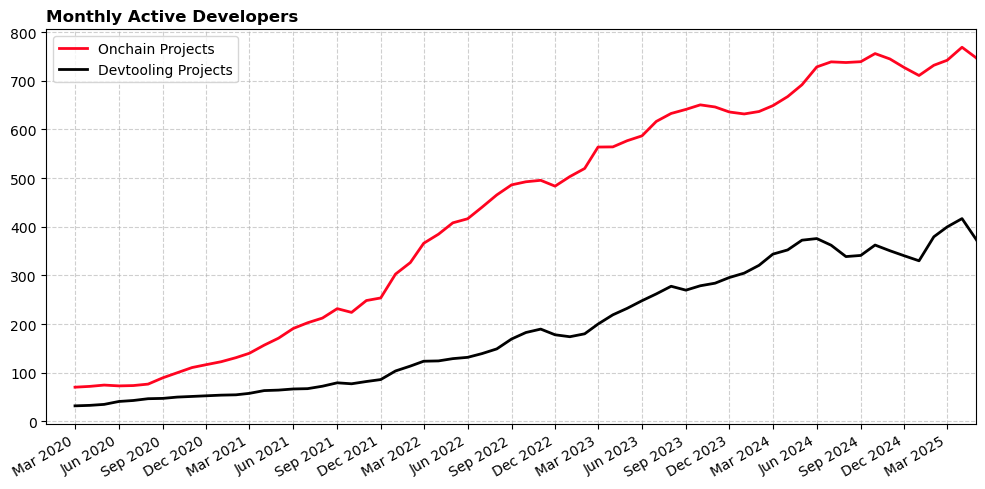
Optimism Retro Funding transitioned from large discrete annual rounds, to regular monthly measurement periods and rewards. We have helped distribute over 20M OP tokens to developers in 2025, regularly adjusting payouts each month based on relative impact to the collective. For deep dives into how the program is doing, check out our reports for developer tooling and onchain builders.
Rapidly answering questions about the ecosystem
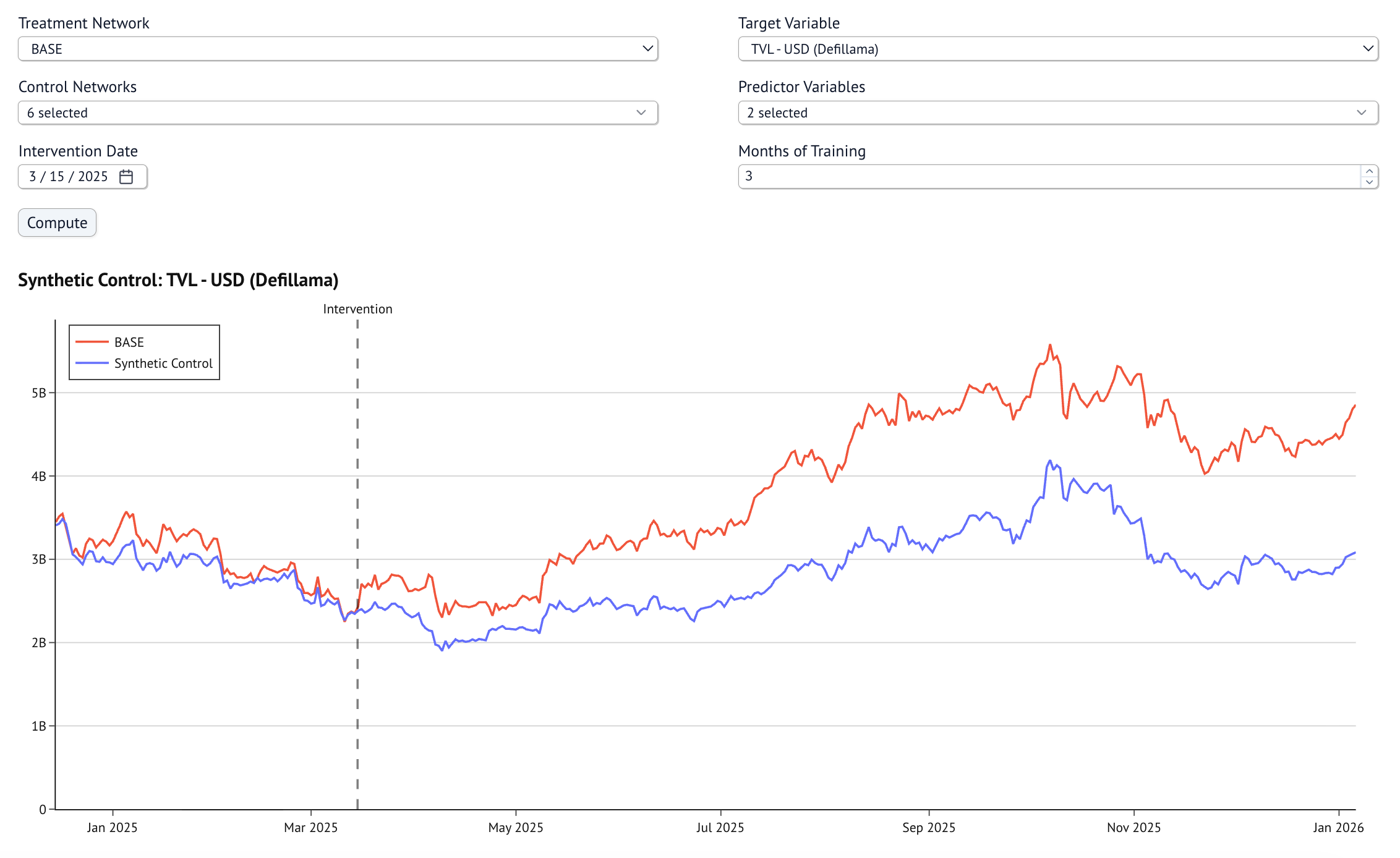
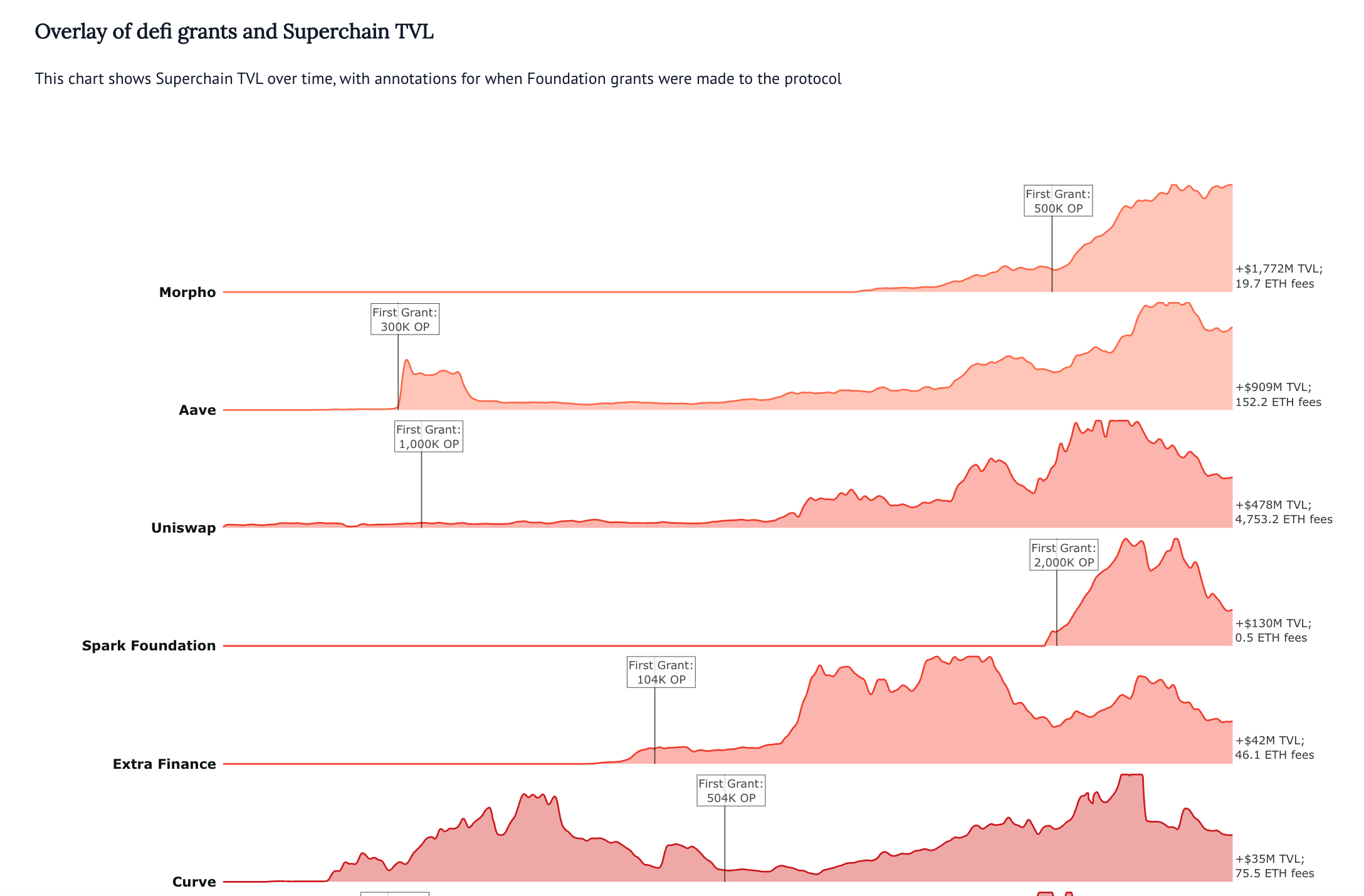
With a wide base of data normalized into a standard semantic model, we can rapidly produce insights at the speed of AI. For example, we started analyzing the ROI of different incentive programs in terms of onchain revenue.
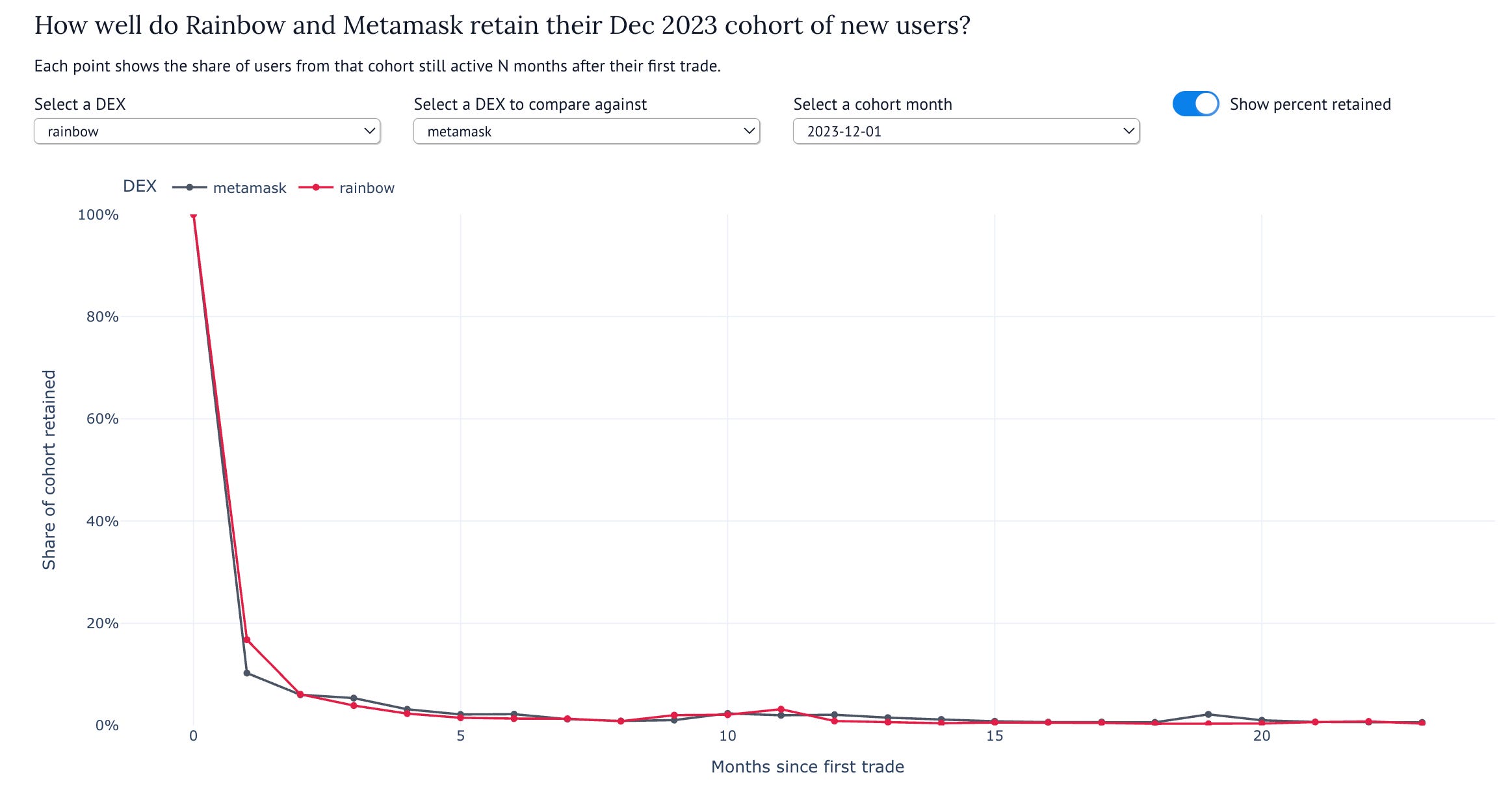
The crypto industry might be the only industry in the world where all product analytics are public. As such, we can compare the relative user retention across DeFi products.
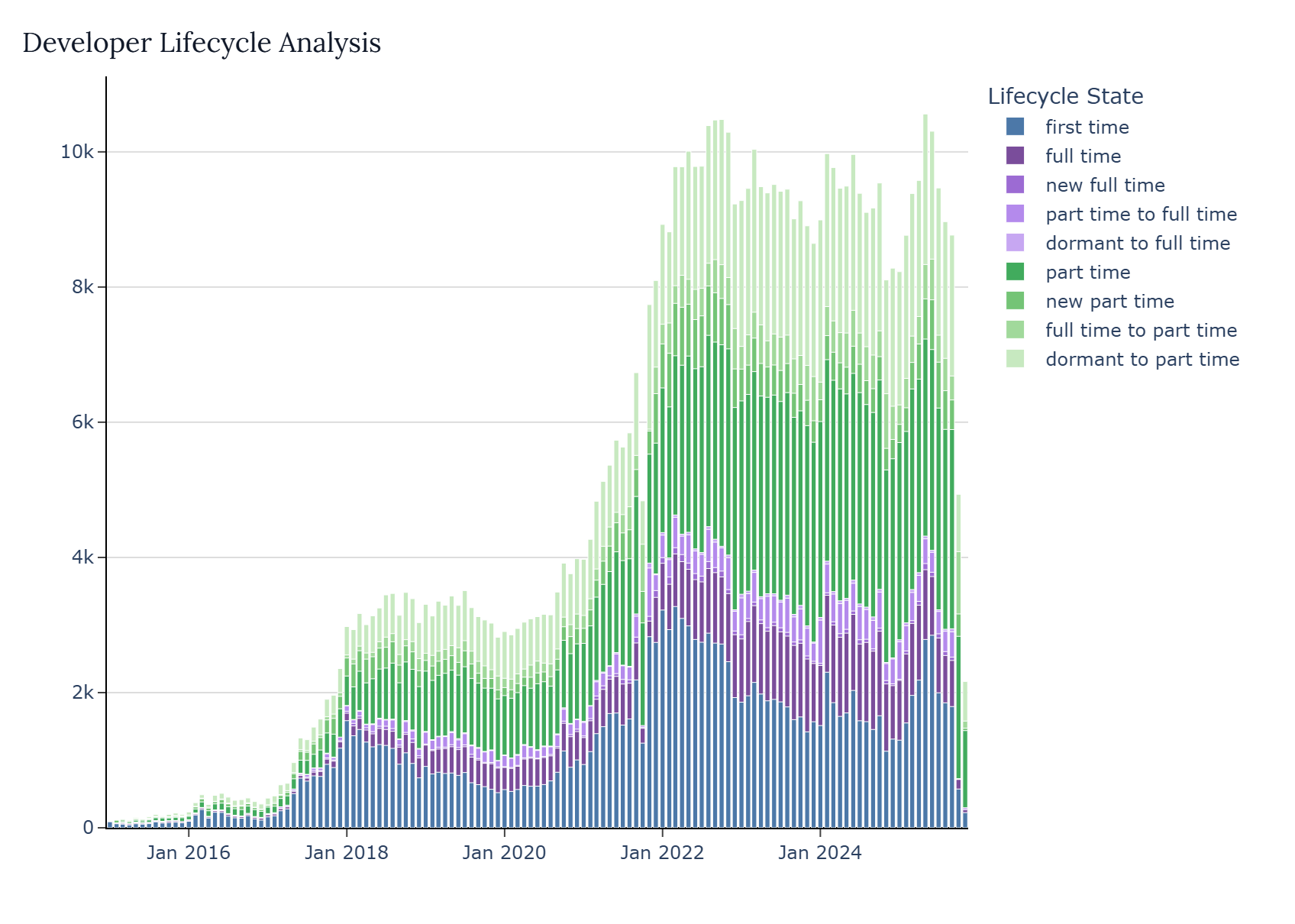
We also monitor flocks of developers across different ecosystems. For example, in this graph we monitor the churn and lifecycle of developers in the Ethereum ecosystem.
These are just a small sample out of hundreds of dashboards we shipped for customers this year.
What we shipped last year
🐍 pyoso: The official OSO Python SDK. We want to meet data scientists where they are. Whether it is local Python, or a hosted Jupyter notebook, you can use pyoso to access the full OSO data platform (read more here).
🍰 OSO semantic layer: We shipped our own flexible semantic layer as a Python library. Inspired by Cube, yet built to produce SQL that runs on any query engine. Semantic models are the heart of collective understanding of data, for both large organizations and AI (read more here).
🔒 Organizations and private workspaces: For the first time, OSO supports securely partitioned private data workspaces for organizations. Inspired by GitHub private repositories, OSO supports any data use case, in addition to open source ones.
🔌 Private data connectors: From a private workspace, users can securely connect to databases and Google spreadsheets. This opens up OSO data analysis tools to the universe of private data.
📒 Embedded Marimo notebooks: We ❤️Marimo. We think it represents the future of what data science will look like. We have embedded Marimo notebooks directly into the OSO data platform, as the primary interface for exploring data on OSO.
🤖 AI assist for Marimo notebooks: We have built AI workflows that are aware of OSO’s semantic model, making it significantly more accurate for producing accurate SQL queries. This is just the beginning for improving data science AI workflows.
🔧 oso_mcp: Built on top of pyoso, oso_mcp adds relevant context to empower any AI agent to leverage the OSO data platform. (read more here).
🔬 AI evals: Over the last couple years, we have produced hundreds of real-world analyses, that we can use to improve and evaluate AI workflows. We have built the eval harness to iteratively improve our AI workflows on real data.
🕷️ REST / GraphQL API crawlers: A lot of valuable data is hidden behind APIs, which makes it difficult to perform data science. In order to make it easy to run arbitrary queries, we built automated crawlers that can scape any API into the OSO data lake. Data is securely partitioned by owner to respect API keys and data licensing (read more here).
🏭 Modern data architecture: We migrated away from Google BigQuery and dbt, towards a state-of-the-art custom data stack including Dagster, Trino, and sqlmesh. This enables orders of magnitude more data jobs for less overall cost (read more here).
Putting it to the test in 2026
This year, we are putting the OSO data platform to the test with new use cases, growing in industries where we are comfortable, like product/ecosystem growth, and in new industries where we aren’t. Meanwhile, we want to build new product features that 10x our users’ productivity beyond where we are now.
For each enterprise customer, we pair an expert human data scientists with OSO AI workflows. The human serves as a strategic liaison for our customers, translating data questions into workflows that best utilize the OSO platform. With the human liaison, we can ensure that we are always delivering the highest quality answers to our customers. With our AI data platform, we are showing that we can dramatically shorten the time to answer big questions, while lowering overall costs.
The future is AI-powered data teams for everyone
AI agents are transforming every surface of how we work, and the data industry is no different. OSO is re-imagining how data work is done, by re-architecting every layer of the stack, tailored for maximum automation, from data ingest, to data modeling, to notebooks.
In the near future, we see a world where everyone, from academic researchers to Fortune 500 executives can be empowered with a dedicated team of agentic data scientists.
Opening the tap for public goods funding
Kariba Labs is a different kind of company. As we double down on the OSO data platform, building in the open and supporting public goods funding remains core to our DNA. With the prosperous software movement, we want to unlock new ways to sustain the public goods of the digital economy. We look forward to spearheading the effort, by showing how it works with OSO. Read more here.
A huge thank you to our supporters 🫶
OSO is only made possible by this incredible community of customers, users, and supporters, including Ethereum, Optimism, Octant, Protocol Labs, Gitcoin, and Arbitrum. We’re so excited for what 2026 has in store!